Showing posts with label Money Realism. Show all posts

04 December 2014

Economics and Politics

Source: Lena Groeger

One of the most important fields to emerge in the past three decades is the field of cognitive and behavioural bias. Countless experiments prove that we are all heavily biased decision makers and not the rational homo economicus purported by academic theories. Because economics is not a natural science like physics, conducting experiments to prove theories is not possible. Despite this, economists have tried to use maths (see econometrics) to prove various theories. The problem with constructing mathematical models is the reliance on assumptions and because there are so many moving parts in the economy, even a complex model will be inaccurate.

The lack of clear evidence results in multiple theories that are difficult to disprove. Usually supporters of a particular economic theory will find it magically aligns with their political bias. Obviously this is no surprise because confirmation bias is one of the most common biases we all exhibit.


For economics to really become practical and more scientific, biases must be eradicated when conducting economic analysis. When biases are mitigated, you don't get flawed predictions like "QE will result in hyperinflation" or "the budget sequester will cause the economy to go into recession."

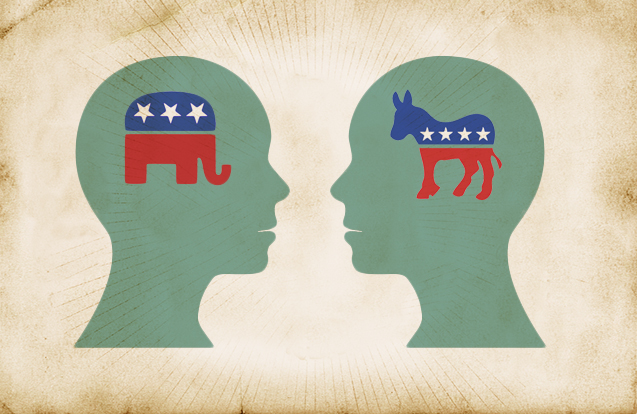
For economics to be scientific and void of bias, it must be apolitical. I can only hope that one day economics will be apolitical. What will this day look like? It will occur when the vast majority of the economists agree on theories and predictions.

This is exactly why I support Money Realism because it tries to keep the politics out of economics. Cullen explains this in his summary of MR eliminating politics from economics:

"We probably can’t completely eliminate politics from economics, but MR is based on attempting to understand the monetary system and the economy at its operational level as opposed to focusing on providing policy solutions like so many other economic schools.   So we focus on things that are verifiable. For instance, how certain institutions are structured in specific monetary systems, how modern banking works, etc.  It’s all based on the view that a superior understanding of the money system comes from building an understanding of how the monetary “machine” works from the ground up.
We try, as best we can, not to provide prescriptive ideas and instead try to provide a set of understandings so that users of MR’s understandings can then decide on their own how best to implement policy.  We are not Keynesians, Monetarists, Austrians or any specific school at all.  MR is simply a set of understandings designed to describe the money system. 
Economics tends to focus on how certain policies can solve problems.  I believe economists should adhere to a Da Vinci method.  That is, when Da Vinci studied the human body he did not focus so much on how to fix the body, but how it worked.  Economists focus too much time trying to fix the economy and not enough time building a set of principles that define how it works.  If more economists adhered to a Da Vinci method I think better solutions would necessarily arrive. 
This is the primary strength of MR.  We don’t treat economics like it’s a religion.  Instead, we treat it like an evolving and changing science that requires flexibility and an open-minded approach.   As far as I know, there are few if any approaches to economics that provide this sort of approach."

Examples of biased economists

Some prominent economists that come to mind are Paul Krugman who has a blog titled "Conscience of a liberal". Just in case you did not know which political ideology he subscribes to. It is also clear that the Nobel Prize winner in economics, still does not understand how the banking system works when he claims that banks are not lending out reserves!:
"Banks are holding almost $2.7 trillion in excess reserves — funds they could lend out, but choose instead to leave idle."
Another biased economist that comes to mind is Stephen Koukoulas who frequently lambasts conservative politicians. He was an advisor to the former Prime Minister and leader of the Australian Labor party, Julia Gillard. Unfortunately his otherwise good economic analysis is tainted by his political bias.

On the other side of the political divide there are people like Peter Schiff and Robert Murphy from the Austrian school and a whole host of neoclassical economists like Arthur Laffer who will preach the virtues of a free market and that more government action will lead to adverse outcomes.

I would suggest you ignore the above economists who closely align themselves with one side of politics. Look out for those who are objective and apolitical, which is important in almost any field that relies on discovering knowledge.
But what about my political ideology? If I had to describe my own political bias then it would be Libertarian. Unfortunately, identifying with a particular ideology leads to many biases that result in a distorted view of reality. Thus I will now address eradicating political bias from your identity.


The most important reason to get rid of politics from your identity

The simple answer is politics makes you stupid. How you ask? When we adopt a political ideology as part of our identity, we perceive value from having correct beliefs. But what happens when these beliefs are wrong? You start to question your own self-worth and become reluctant to change these beliefs/identity, which makes "changing your identity a psychologically brutal process." 

"The most important psychological imperative most of us have in a given day is protecting our idea of who we are and our relationships with the people we trust and love." These quotes are from the article by Ezra Klein - How politics makes us stupid, which is highly recommended reading. This is the reason I am abandoning my Libertarian beliefs or any political belief/ideology for that matter. I don't want to be stupid and I guess you don't want to be either!

17 October 2014

Mea Culpa

"When the facts change, I change my mind. What do you do, sir?" - Unknown quote

Rebuilding the model

Part of the learning process is acknowledging the limitations of your understandings and when a better theory or model of the world is developed then one must reject any contradictory models or theories. I say this because a year ago you could have described my economics views as Austrian, with little tolerance for government intervention. Whether it be regulations, taxes or spending - the less the better.

That changed towards the end of 2013 after I learned that the Austrian model of banking and money is inaccurate when applied to the current monetary system (it may have been accurate decades ago). Further doubts arose as I learned more about cognitive bias and behavioural economics/finance. These realisations invalidated my economic view of the world and I began to question everything including: if free markets were really the best way to allocate resources? and does government have a role to play during recessions? But I first had to address how I came to be so wrong in the first place.

I looked at my economic education sources: Mises.org, ZeroHedge, Peter Schiff etc. What do they all have in common? All have a strong libertarian political bias and hence also share a pro-free market or Austrian economic view. I couldn't believe it, I had fallen for confirmation bias. My own libertarian political bias had guided me to embrace an economic school of thought which supported absolutely free markets with little room for government intervention. I knew that any cognitive bias distorts one's perception of reality and if I wanted to know how the economy really operates, I would need to research other economic theories and schools of thoughts objectively.

Like a phoenix rising from the ashes, a new model is born.

I started my post-Austrian economic journey when I discovered Modern Monetary Theory (MMT) and Money Realism (MR). At first their theories sounded heretical. They were saying things like the government can never default and that bank loans create bank deposits. Like any objective critical thinker, I learned more about it and found their monetary model to be a more accurate portrayal of the current monetary and banking system than any Austrian model.

Earlier this year, the Bank of England released a paper (highly recommended reading to understand money creation and QE) explaining the monetary system, which matched the model portrayed in MMT and MR. It also means that it punches holes in Austrian theory with conclusions such as:
  • Banks don't rely on deposits to create loans
  • Savings that are deposited in a bank do nothing for the economy. Hence savings deposited at a bank or what Keynes described as "liquid assets", results in less economic activity
  • A central bank conducting QE is not the same as the "money printing" in Zimbabwe or Weimar Germany
I still think the Austrians have a lot right about high levels of government intervention harming the economy and their theory of malinvestment has some merit. But their monetary model (loanable funds model) needs to be discarded to reflect the current reality. In response to these claims, Austrians retort that they describe the real economy and not the fiat/nominal/accounting economy. This may be true, but at least acknowledge that the loanable funds model (people save and then banks lend those savings out) embedded in Austrian Capital Theory is utterly wrong.

So what are my general beliefs and views now? After being intellectually burned on Austrian theory, I've become a strong proponent of objectivity and observation rather than developing a theory and then imposing it on the world. In Nassim Taleb's book Antifragile, he discusses this thought process and classifies it as phenomenology. Simply put: don't worry about the theory, just know what works.

Much of mainstream economics is influenced by political bias and therefore any accurate economic school of thought must be apolitical. Given this premise, I was forced to reject MMT because they are tainted by a strong left-wing political ideology which favours pervasive government intervention. This leaves MR which explicitly states its focus on the "operational realities of the current monetary system". Political decisions are left to others and have no place in MR. As nerdy as this sounds, I fell in love with this principle.

You can learn about Money Realism at pragcap.com run by the wonderful and erudite Cullen Roche.

What are my current economic thoughts?

I think everything that MR claims is true when compared to all other economic schools of thought. Cullen does a fantastic job of comparing the other economic schools here and here.

One of the important tenets of MR is that we are all irrational and thus, markets are not as efficient as we believe (you probably already knew that). This does not imply free market capitalism should be rejected. It just means pure capitalism is not the ideal outcome for the economy.

Government intervention can be a net benefit to the economy in a recession if done correctly. There is a fine line between allowing an unsustainable boom or bubble to deflate and preventing a potential depression. Policy makers must not prop up inefficient businesses if they are the by-product of poor decisions by investors (similar to the Austrian malinvestment theory).

I also place a lot of value on cognitive bias and behavioural economics/finance. It explains everything from booms/busts (herd mentality and loss aversion) to people claiming the data is manipulated to show no inflation (confirmation bias and just batshit crazy).

I also have incorporated the main idea of Antifragile by Nassim Taleb, describing things that become stronger (antifragile) not weaker (fragile) after being temporarily exposed to a stressor.

Cannot recommend this book highly enough!

An economy is just the aggregate of people's spending decisions and because of behavioural biases like overconfidence and the herd mentality, excesses can accumulate in the system. Without the full impact of a recession, risk taking will become irrational as investors expect fiscal and monetary stimulus to limit their losses (moral hazard). This is similar to Minsky's Financial Instability Hypothesis which states stability creates instability. In layman's terms, the more stable the economy, the more risk taking which results in future instability. Again you can see the influences of behavioural economics with overconfidence etc.

This is the main reason I strongly believe a recession should be allowed to run its course. After a recession, the system becomes stronger as the weakest businesses are liquidated and the factors of production that were previously used inefficiently are now reallocated to the strongest and more efficient businesses. The government can support unemployed people through welfare and can stimulate economic activity but cutting taxes and allowing the deficit to increase. These measures must be taken ONLY after the unsustainable excesses and malinvestments of the boom are liquidated.

What lies ahead...

Now that I have a better understanding of the reality of the banking system, it's time to update my predictions. My own view is that all developed economies are sinking into Japanese style debt deflation. The conventional monetary policy is that lowering interest rates encourages more borrowing which is then spent on investment by businesses and consumption by households. Implicit in this theory is that we can reduce the severity of recessions and the economy will grow forever. Is that possible? Can we just always lower interest rates and the economy keeps on chugging along to new heights? Remember that old phrase when someone tries to convince you that some form of government intervention makes everyone a winner, there's no free lunch in economics. There are other confounding factors such as demographic trends, inequality and technological progress fuelling the deflationary trend which I will discuss in future posts.

But that's it for now. In the next post I will be reviewing my past predictions and updating my forecasts for the future using my current and more accurate understanding of economics and finance.