It never made sense to me how a country of Australia’s
geographic size can have some of the highest property prices in the world.
Australian cities are on par with population dense cities like Hong Kong,
Singapore, Tokyo and high profile cities like NYC, Paris and London. This
raises questions like why haven’t we developed inland Australia? Sure it’s
a hot desert with arid land but that hasn’t stopped middle-eastern cities
developing or even one of my favourite cities Las Vegas springing up.
There are actually a number of issues explain why property
prices are unusually high in Australian and with most economic issues that sees
costs rise consistently or quality deteriorate; government has some involvement
in the issue.
The following notes have been sourced from the policy
monograph released by the Centre for Independent Studies entitled: Price Drivers: Five Case Studies in HowGovernment is Making Australia Unaffordable by Oliver Marc Hartwich and
Rebecca Gill (December 2011) ISBN: 978 1 86432 133 3.
Main reasons that make housing less affordable include:
- Land supply
- Tax incentives for property investors (negative gearing)
- Subsidies for owner-occupiers (first home owner grants)
- Stamp duties
- Infrastructure levies
Land supply
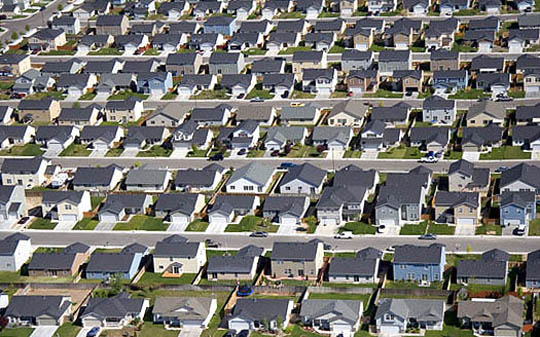
The population is concentrated in the metropolitan capital
cities.
Canberra has a lot of land, and yet its house prices are
nearly as high as prices in Sydney and Melbourne.

Housing prices have risen far more than construction costs.
One can then conclude that land scarcity has been the main driver of property
price rises.
Negative gearing
Property investors whose capital costs exceed their rental income, can offset their net losses against their income tax liability. This
incentivises investment in property using debt with the prospect of capital
gains. Hence, highly leveraged property investors increase the demand for
housing which results in higher prices.
First home owner
grants
Unfortunately these grants increase demand since buyers in
this segment of the market all have access to the grant and will bid up entry
level property prices.
Stamp duties
There is no economic rationale for stamp duty and is set
from state to state at an arbitrary level. An interesting fact is that taxes on
financial and capital transactions in Australia, which includes stamp duties,
are twice the average of OECD countries. The effect of stamp duties is just to
make housing less affordable.

Infrastructure levies
Local councils have been increasingly resorting to using
levies to pay for infrastructure investment. These levies are borne by property
developers, who pass them on to their customers.
Housing is one of the most distorted markets in Australia.
All these interventions have made housing unaffordable because the market
supply is restrained. Governments respond by perversely boosting demand and
making housing less affordable.
Key recommendations:
- Increase supply by encouraging councils to take on more residents through local government finance reforms
- Abolish both negative gearing and the first-time buyers grants
- Abolish stamp duty
- Abolish infrastructure levies and permit the private sector to own and operate infrastructure
Debt-fuelled buying
and a slowing economy
The other issue that tends to appear in most inflated
markets is debt fuelled buying. Australian banks have made billions over the
years lending to property buyers and investors. In the period during the GFC,
prices fell dramatically as the entire economy deleveraged. The Rudd government
stimulated the economy and the RBA slashed interest rates to 50 year lows. This
resulted in a property market recovery with prices rising from the bottom by
20%! Clearly, movements in interest rates affect property prices since higher
rates increase the debt burden and vice-versa for lower interest rates. In the
last few years, rates have been steady but have declined in 2012 and are
expected to decline further as China appears to be slowing. However, the entire
interest rate cut has not been passed on by banks because they claim that their
cost of funding has increased. This is somewhat true but we have also seen
profits rise at all the banks, which suggests the banks are price makers and not
price takers. The market concentration among the big four banks is high and the
slow shift from offshore funding to onshore funding over the years should give
the banks the ability to pass on more of interest rate cuts than we have seen
in the past.
Despite the interest rate cuts we have seen over the past
year, property prices continue a slow grind lower. With the economy expected to
slow further, the current trend of lower property prices should persist until
the government or the RBA decides to stimulate the economy through increased
borrowing or lower interest rates.
Going forward
The government imposed distortions are unlikely to be
reduced at any time in the near future since there is no political debate
whatsoever around the housing market. Should the economy continue to
slow, it is even less likely that these barriers are removed since they generate
taxation revenue and would be negative for the state budgets. However, a
slowing economy will also see property prices decline until the politicians
decide it’s time to be Keynesians and stimulate the economy.


